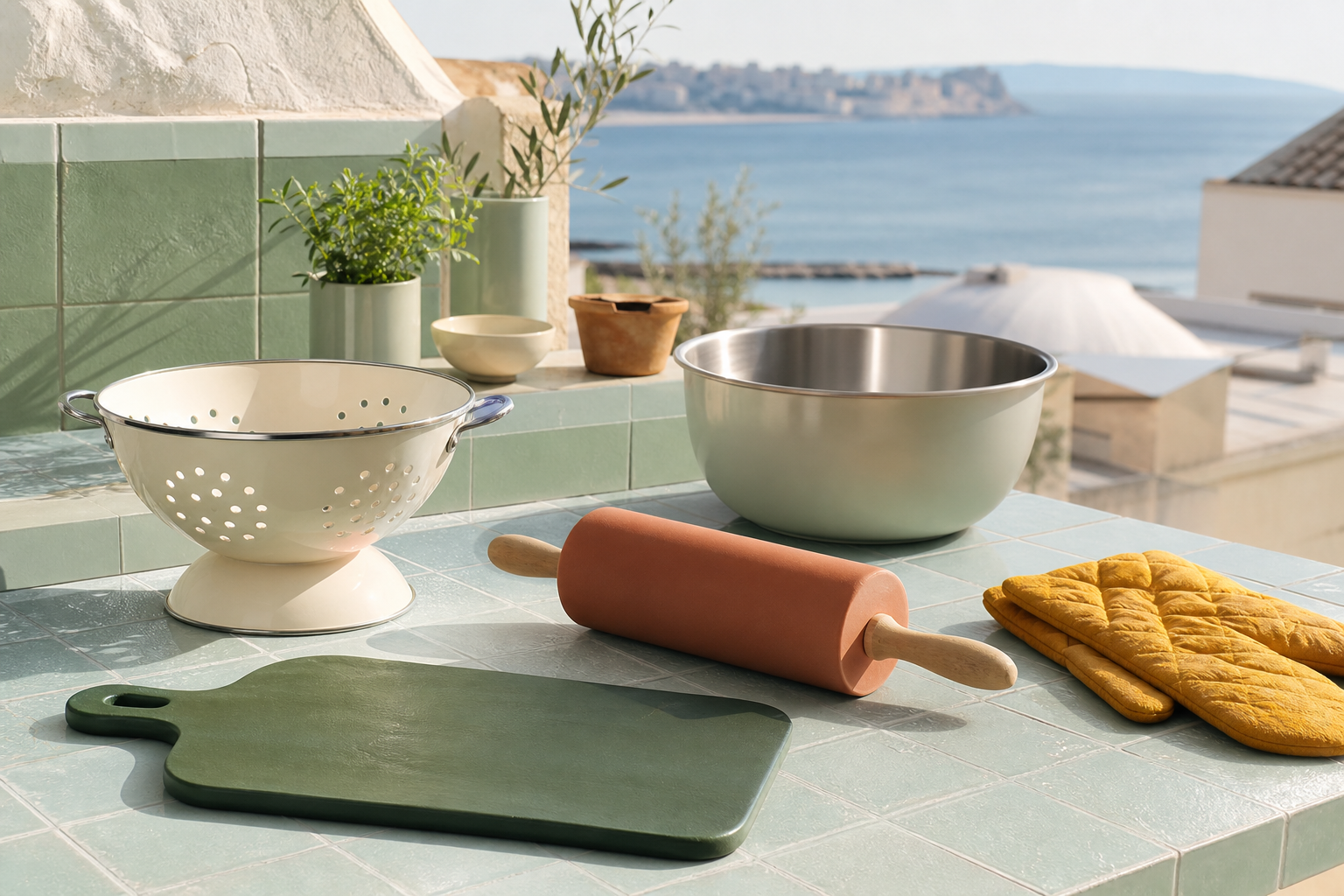
Kitchen and tableware product photography covers a broad product range: forks, spoons, knives and serving sets; pots, pans, saucepans, coffee pots, kettles and baking tools; as well as glass, porcelain, ceramic, melamine and other houseware collections. Each product is photographed around its material, form, set structure, use and intended sales channel.
Products covered by this category
Cutlery sets, serving utensils, cookware, kitchen accessories, storage containers, chopping boards, trays, plates, bowls, cups, glasses, carafes and tabletop accessories can be produced within one consistent visual system. This brings cutlery photography, cookware photography, glassware photography, ceramics photography and tableware photography into a single commercial production plan.
Lighting metal, glass, porcelain and coated surfaces
Stainless steel, polished metal, enamel, glass and glazed ceramic surfaces reflect their surroundings. Lighting is shaped to control unwanted reflections, define edges and retain an authentic material response. Matte, cast iron, wood and silicone surfaces are rendered with visible texture, volume and accurate colour.
Production for catalogues, e-commerce and campaigns
Products can be photographed on white for clipping, in a clean catalogue system, as flat lays, still lifes, styled tablescapes or practical use scenarios. Consistent comparison angles are prepared for e-commerce and marketplaces, while stronger compositions support campaigns, social media and brand catalogues.
Collection consistency, colour and delivery
Camera angle, light direction, scale and shadow structure are fixed across a product series. Colour management supports reliable comparison between sizes, colours and finishes; final files can be delivered separately for web, print, packaging, dealer presentations and social platforms.
Commercial applications
The final kitchen and tableware imagery can support online stores, marketplaces, product catalogues, packaging, houseware retail, hospitality procurement, social media and advertising. The objective is to communicate not only the shape of the product, but also its function, perceived quality and role within the collection.