A film-frame feeling comes from what happened before and after
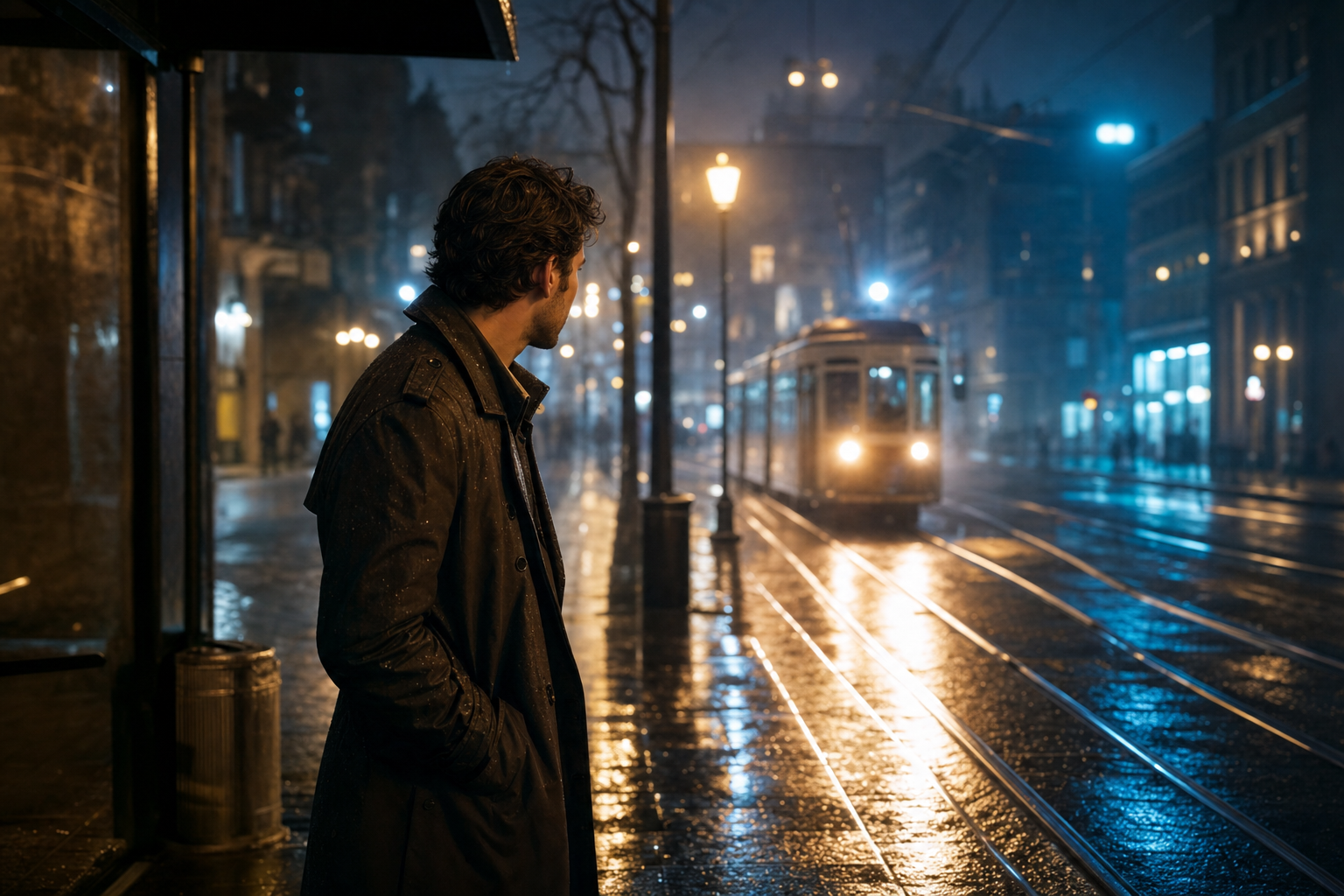
Cinematic fashion suggests a character caught inside an action rather than merely posing. Imagining someone who has just left a doorway, is waiting or has decided to walk away changes body language. The viewer does not know the whole event but senses that the image belongs to a specific time.
Light needs a source inside the scene
Dramatic light is not a random mix of colours. A believable source—a window, street lamp or practical fixture—sets direction. Fill and coloured accents remain subordinate to that logic, keeping atmosphere from feeling manufactured.
Colour directs emotion
Warm and cool contrast, night blue or dirty amber do not create cinema on their own. The palette is limited according to character and garment colour while skin remains natural inside the world. Grading continues a decision made before capture rather than applying a detached filter.
Leaving curiosity rather than a complete answer
A strong cinematic frame does not explain everything. A person outside the crop, an open door or motion interrupted halfway leaves room for the viewer. The garment remains legible through light and movement, gaining a life from atmosphere rather than being eclipsed by it.