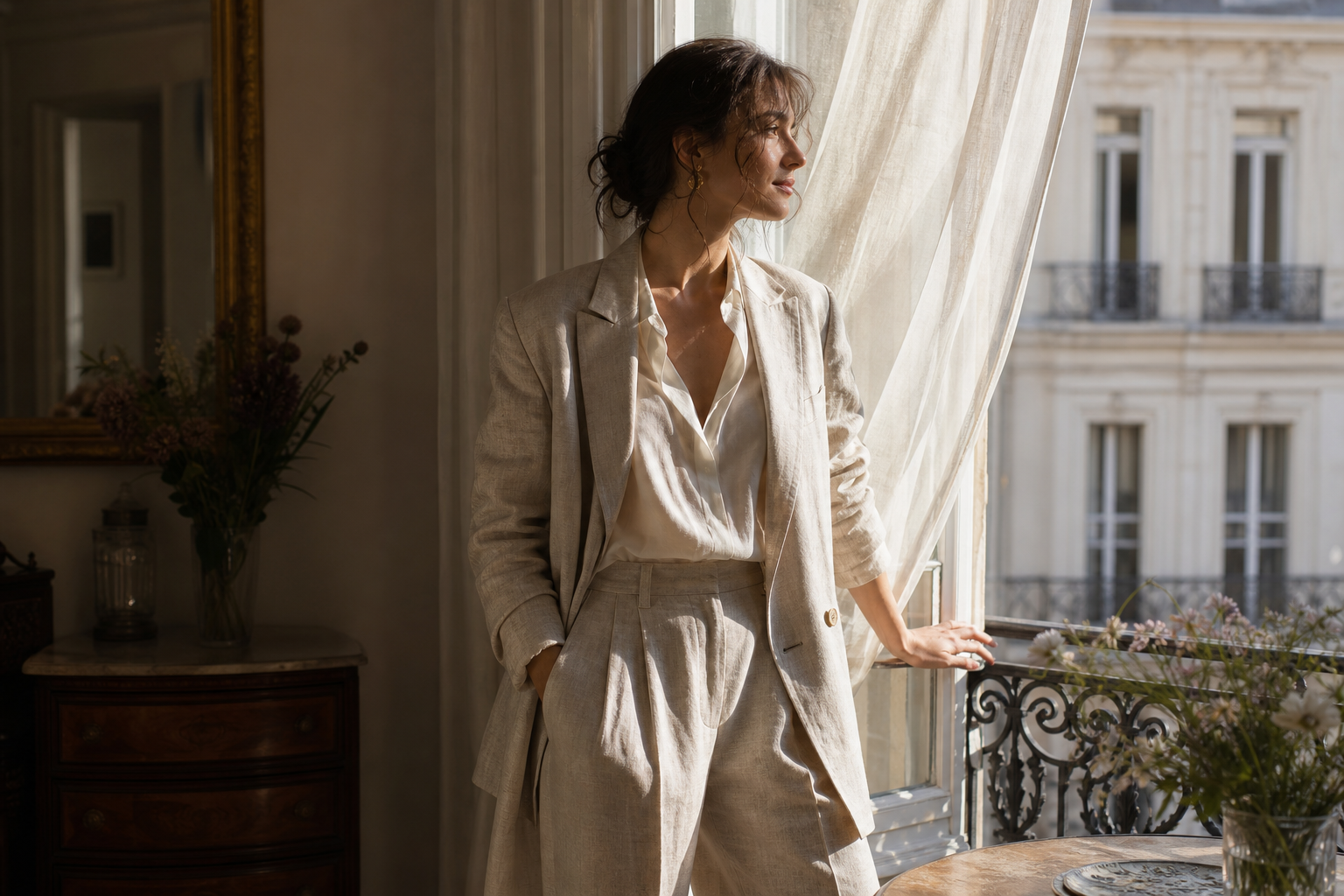
Natural light is scheduled, not simply spontaneous
A natural-light shoot is more deliberate than waiting for pleasant weather. Window direction, solar height and reflections from surrounding buildings change by the hour. A scout reads these shifts and selects a window according to whether the product is light or dark and whether movement or stillness is required.
Control through reflection and negative fill
A white reflector opens a shadow, a coloured wall can contaminate skin and a black surface gives depth to face and garment edges. These simple tools shape contrast without destroying the character of available light. The goal is not to imitate a studio but to reveal the best direction already present.
Balancing honest skin and fabric
Soft daylight can make skin intimate while losing detail in pale fabric. Exposure is checked against the product as carefully as the face. Grading preserves the temperature of the day, and product colour is compared with a reference rather than allowing “natural” to mean inaccurate.
Producing a consistent series in changing light
Cloud movement and sun angle introduce variations across a series. Model position, reflector distance and shooting order are recorded alongside camera settings. Essential catalogue frames come first, followed by movement, creating consistent delivery from a variable source.